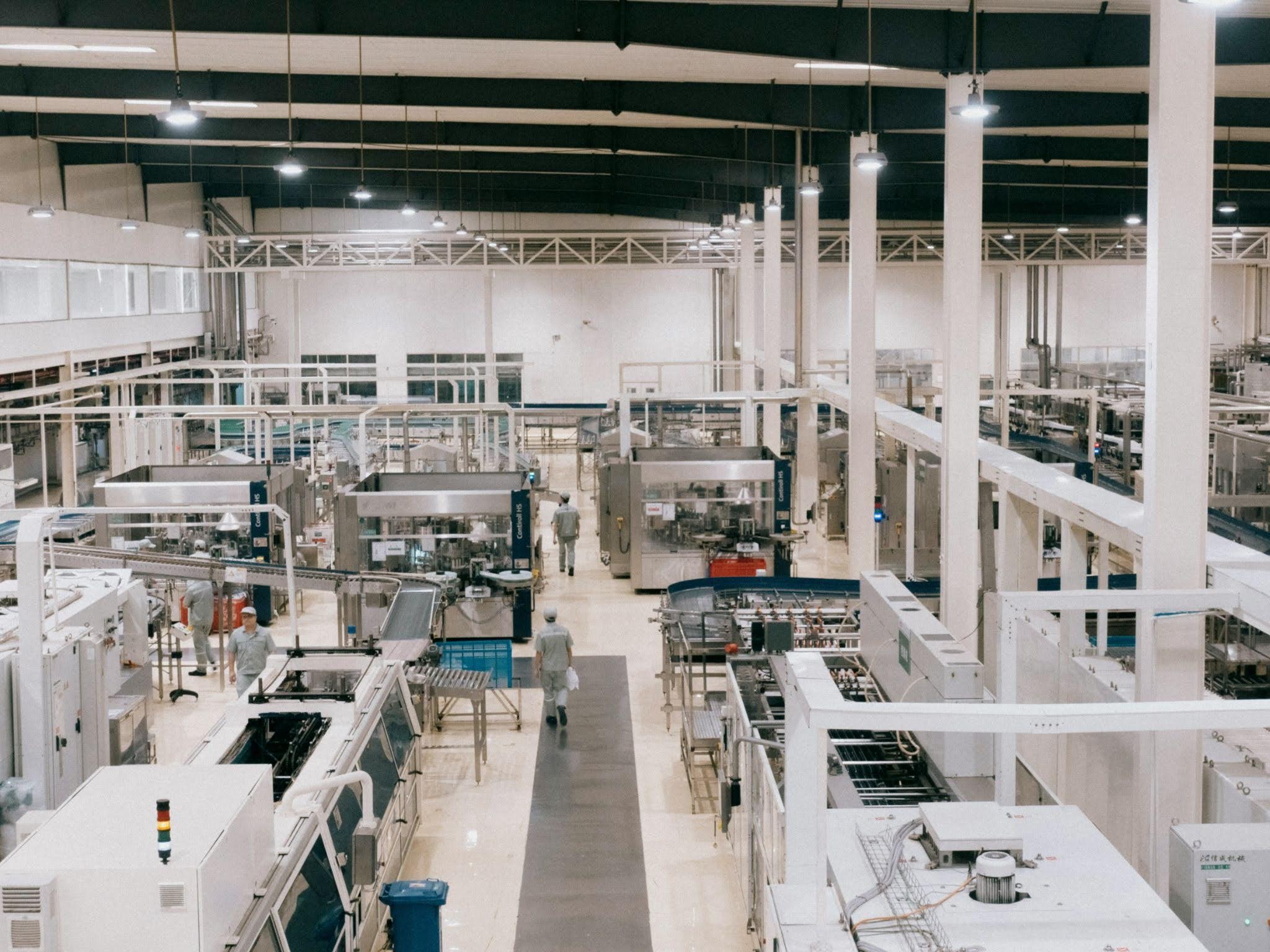

For years, the manufacturing talent narrative has centered on a familiar challenge: not enough workers. Labor shortages, high turnover, and increasing production pressure have all reinforced the idea that the industry’s biggest constraint is hiring.
But that diagnosis is starting to crack.
The real issue is not how many people companies can bring in. It’s how quickly those people can become productive once they arrive.
In other words, manufacturing doesn’t have a talent problem. It has a workforce infrastructure problem.
Why Training Models Are Breaking Down
The traditional approach to training in manufacturing was built for a different era, one defined by slower product cycles and more stable processes.
New workers learned through shadowing. They followed experienced operators, absorbed knowledge over time, and relied on manuals or static documentation to guide their work. Expertise was developed gradually, often through repetition and informal mentorship.
That model no longer holds.
Today’s manufacturing environments are more complex, more dynamic, and more digitally driven. Products change frequently. Processes evolve quickly. And the expectation is no longer that workers will learn over months. It’s that they will perform within days or weeks.
The problem is that training systems haven’t evolved to match that reality. They remain slow, inconsistent, and heavily dependent on individual experience. As a result, onboarding timelines stretch, variability increases, and productivity takes longer to materialize.
The Knowledge Bottleneck
Manufacturers are not short on information. Engineering teams have spent decades building sophisticated systems to define products, manage changes, and structure complex data.
But that knowledge rarely reaches the factory floor in a form that is usable.
“Engineering teams have spent two decades digitizing product data,” says Garth Coleman, CEO of Canvas Envision, “while most manufacturers still translate those changes into floor execution through PDFs, tribal knowledge, and word of mouth.”
That translation layer is where the breakdown happens. What begins as structured engineering data becomes fragmented guidance, disconnected from its source and difficult to maintain.
Instead, knowledge is often manually converted into documents, instructions, or workarounds that simplify complexity but strip away critical context. The result is a bottleneck: knowledge exists, but it does not scale.
Execution Still Depends on Interpretation
This disconnect shapes how work actually gets done.
On the factory floor, workers are often asked to interpret information rather than execute it with clarity. They read instructions, compare documents, and rely on experience to fill in gaps. Even in highly digitized environments, the last mile of execution remains largely manual.
That introduces variability.
Two workers performing the same task may arrive at different outcomes. Updates may be applied inconsistently. Errors emerge not because people lack skill, but because the system depends on interpretation rather than guidance.
Over time, this affects more than quality. It slows down onboarding, increases reliance on experienced workers, and extends the time it takes for new hires to reach full productivity.
The Shift Toward Execution Systems
A growing number of manufacturers are beginning to address this gap by rethinking how knowledge is delivered at the point of work.
Rather than relying on static documentation, they are moving toward what can be described as a visual execution layer: a system that transforms engineering and operational data into structured, step-by-step workflows that workers can follow in real time.
In this model, instructions are not separate from the source data. They are connected to it. When designs change, workflows update. When tasks vary, guidance adapts. The goal is not to provide more information, but to make that information actionable.
Companies like Canvas Envision are working within this space, focusing on how AI can translate complex product and process data into interactive, usable workflows that support execution in real time.
What Changes When Execution Is Fixed
When execution is aligned with structured, accessible knowledge, the impact is immediate.
Onboarding accelerates because new workers no longer rely solely on shadowing or informal knowledge transfer. Processes become more consistent, reducing variability across teams and shifts. And organizations become less dependent on individual expertise, allowing knowledge to scale beyond specific people.
More importantly, productivity becomes system-driven.
Instead of relying on how quickly individuals can learn, performance is supported by how effectively the system guides them. The result is a workforce that can adapt more quickly to change, without sacrificing quality or consistency.
The New Competitive Advantage
As manufacturing continues to evolve, the conversation is beginning to shift.
The companies that succeed will not necessarily be those that hire the most workers. They will be the ones that can make their workforce productive the fastest.
That requires more than recruiting. It requires rethinking how knowledge flows, how work is guided, and how execution is supported at scale.
Because in the end, the future of manufacturing will not be defined by how much companies know, but by how effectively they turn that knowledge into action.